Who does what: the core SACCO roles
Running a healthy SACCO depends on clear roles, where everyone knows what they are responsible for. Splitting the work into distinct functions is more than tidy. It is a control in itself.
Why it matters: when different people handle approving, recording and holding money, no one person can both make a mistake and hide it. Clear roles protect members and make daily work smoother.
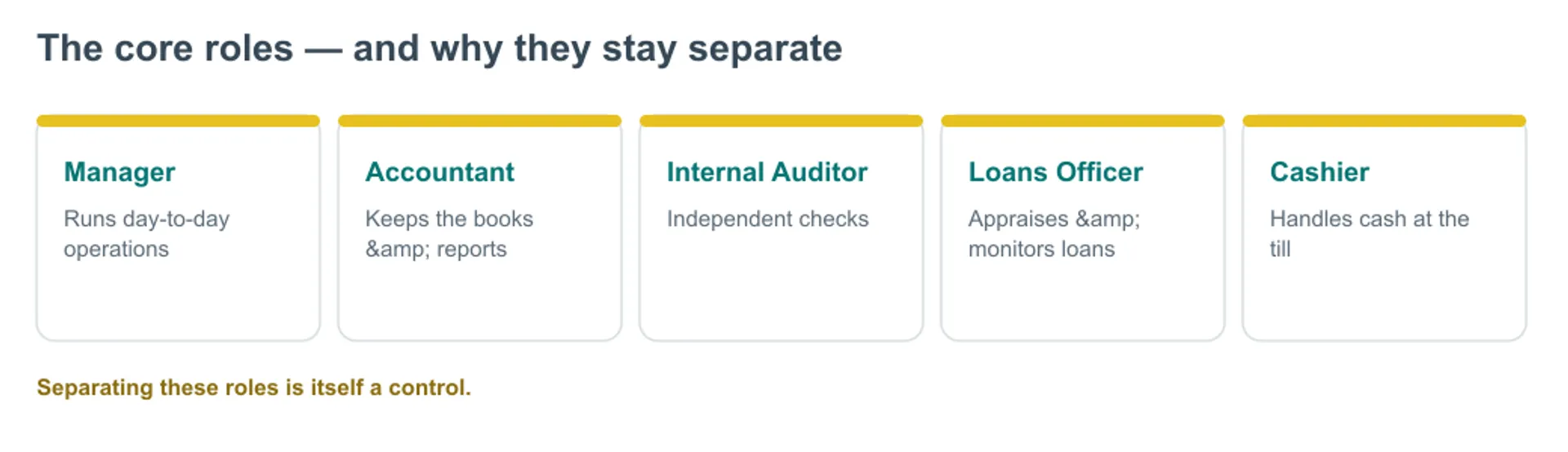
The five core functions
These are functions, not job titles or pay grades. In a small SACCO one person may wear two hats, but never two that cancel out a control.
- Manager runs day-to-day operations and leads the staff.
- Accountant keeps the books and prepares financial reports.
- Internal Auditor checks independently that rules are followed.
- Loans Officer appraises loan applications and monitors repayment.
- Cashier or Teller receives and pays out cash, balances the till.
Why separating roles is a control
Each function watches a different part of the same money trail.
- The Loans Officer recommends a loan, but someone else disburses the cash.
- The Cashier handles money, but the Accountant records it independently.
- The Internal Auditor answers to the board, not to the Manager, so checks stay honest.
- No one approves, pays and records the same transaction alone.
Make the lines clear
Roles only protect you if they are written down and respected.
- Put each role's duties in a simple, written description.
- Avoid combinations that let one person both move and conceal money.
- When you must combine roles, add a compensating check (a second signature, a board review).
In CAMS, user roles and permissions let you map these functions to system access, so people only reach the screens their role needs.
Quick checklist
- Each core function clearly assigned
- Roles written down, not just understood
- No conflicting duties in one person
- Internal Auditor independent of management
- Cash handling separated from record keeping
- Compensating checks where roles overlap