Audit: internal and external
An audit is an independent check that your SACCO's money, records, and controls are sound. There are two kinds, and a healthy SACCO uses both.
Why it matters: members trust you with their savings. Audits prove that trust is well placed, and catch small problems before they become losses.
Internal audit: the ongoing watchdog
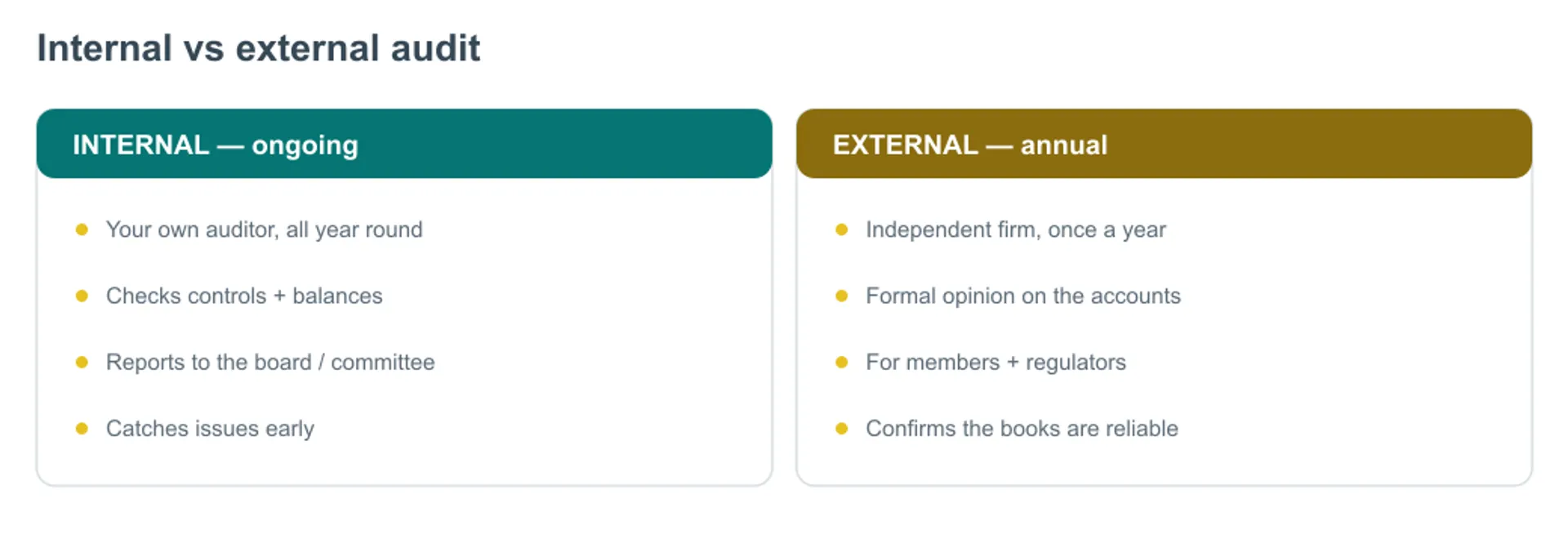
- Done by the SACCO's own internal auditor, working independently of day-to-day management.
- Checks happen all year round, not just once.
- Tests whether controls are actually being followed: cash counts, loan approvals, reconciliations.
- Reports to the board or its audit committee, not to the managers being checked.
External audit: the annual independent opinion
- Done once a year by an outside, independent audit firm.
- Reviews the year's financial statements and gives a formal opinion on whether they are accurate.
- Brings a fresh, impartial pair of eyes from outside the SACCO.
- Helps assure members, lenders, and regulators that the accounts are trustworthy.
What auditors check
- Internal controls: are dual control, segregation of duties, and approvals working?
- Balances: does the cash, savings, and loan book match the records?
- Compliance: are policies and reporting rules being followed?
Act on findings and report regularly
- Treat every finding as a to-do, not a complaint. Assign an owner and a deadline.
- Track open findings until they are closed.
- Report audit results and progress to the board regularly, for example quarterly.
- Never let the same finding appear year after year.
In CAMS, transaction records and reports give auditors a clear trail to test against.
Quick checklist
- An internal auditor runs independent checks year-round
- An external firm audits the accounts annually
- Auditors report to the board, not to management
- Every finding has an owner and a due date
- Open findings are tracked until closed
- Audit results reported to the board regularly