Liquidity and the ratios that keep your SACCO healthy

Liquidity is your SACCO's ability to pay members when they ask, to honour withdrawals and fund approved loans as they fall due. A society can be profitable on paper and still fail if the cash is not there on the day a member needs it. Sound liquidity management keeps that promise, month after month.
Members trust you with their savings on the understanding that they can get them back. One busy withdrawal day that you cannot meet destroys years of confidence. Watching a few simple ratios each month warns you early, long before the cash box runs dry.
Who is responsible
Liquidity is a chain of duties, not one person's job. The Board sets the policy: minimum cash reserves, borrowing limits and how much of savings may be lent out. Management runs day-to-day cash flow, projects inflows and outflows, and keeps the reserve topped up. The finance and credit committees balance loan demand against available funds, so lending never outruns the cash needed for withdrawals.
The ratios to watch each month
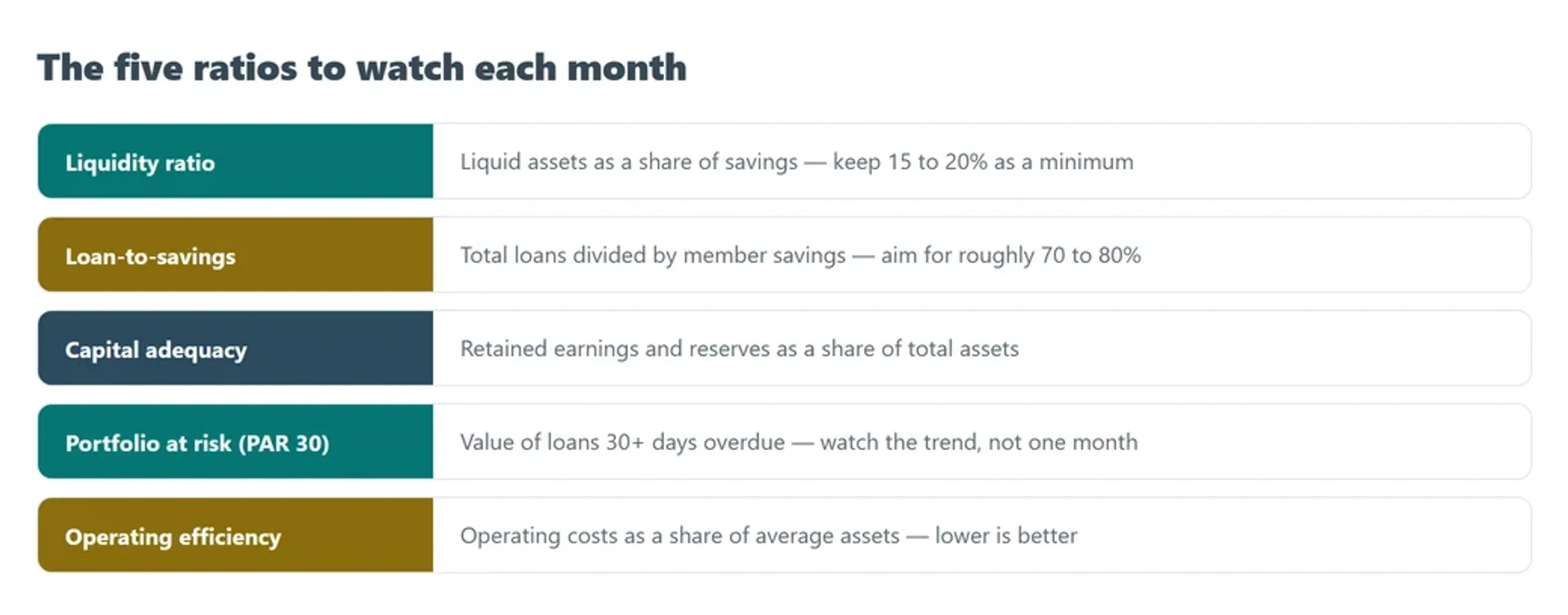
A PEARLS-style dashboard keeps monitoring simple. Track these every month and compare against your targets:
- Liquidity ratio: liquid assets (cash, bank balances, easily sold investments) as a share of savings and short-term deposits. A common minimum is 15–20%. This is your ability to pay withdrawals now.
- Loan-to-savings ratio: total loans divided by total member savings/deposits. Aim for roughly 70–80%; much higher and too much money is tied up in loans and unavailable for withdrawals.
- Capital adequacy / institutional capital: retained earnings and reserves as a share of total assets. A cushion of 8–10%+ absorbs losses and protects members' savings.
- Portfolio-at-risk (PAR): the value of loans with payments overdue (usually 30+ days) as a share of the whole portfolio. Keep it below 5%; rising PAR chokes off the loan repayments you rely on for cash.
- Operating efficiency: operating costs as a share of average assets. Lower is better; high costs quietly drain the funds available for lending and reserves.
Setting minimum and maximum cash levels
Hold a liquidity reserve, a written minimum amount of cash and near-cash you never drop below, sized to cover normal withdrawals plus a safety margin. Also set a maximum, because idle cash earns nothing. Cash above the ceiling should be lent to members or placed in short-term interest-bearing deposits. Review both limits as the SACCO grows.
Matching short deposits against long loans
Basic asset-and-liability management means not funding long loans with money members can pull out tomorrow. If most deposits are short-term and callable, keep loan terms and amounts prudent, and hold a bigger reserve. Watch concentration too, because a few large depositors leaving at once can strain even a healthy society.
Planning for the busy seasons
Withdrawal demand is uneven. School fees, planting, harvest and festive periods all spike outflows. Build a simple cash-flow forecast for the months ahead, arrange a standby credit line or inter-SACCO facility for emergencies, and never lend the reserve away just because a quiet month made cash look plentiful.
Quick checklist
- Calculate the five key ratios every month and compare against Board-set targets.
- Maintain a written liquidity reserve (minimum ~15–20% of deposits) and never breach it.
- Set a cash maximum and invest or lend the surplus rather than leaving it idle.
- Keep the loan-to-savings ratio in range and PAR below 5%.
- Prepare a cash-flow forecast for upcoming high-withdrawal seasons.
- Report liquidity figures to the Board monthly and act on any breach immediately.