Politically exposed persons and sanctions: what the checks are for
Summary
Why members are screened against politically exposed person and sanctions lists, and what a hit does and does not mean.
About 4 minutes · 7 steps. Also called: PEP checks, sanctions screening, watchlist checks.
Sign in with your email to read the rest of this article, track what you have finished, and earn your certificate.
Sign inPrerequisites
- Customer due diligence and the risk-based approach — a PEP lands in the enhanced level described there.
- Your institution's escalation contact for compliance matters.
Step-by-step
Learn what PEP means before any list or sign-in: a politically exposed person holds, or has held, a prominent public position. Close family and close associates count too, as do senior party figures and officials of international organisations.
Understand why it matters. A prominent position gives influence over public money and contracts, so the risk that funds come from bribery or corruption is higher. Leaving office does not end it at once; your institution decides how long the treatment lasts.
Hold on to the key point: being a PEP is not an accusation and not a reason to refuse service. It calls for enhanced due diligence and senior approval.
Learn what a sanctions list is: governments and international bodies publish people, companies and vessels nobody may do business with.
Treat the two differently. A PEP relationship is managed with extra checks and sign-off. A confirmed sanctions match cannot be managed — dealing is forbidden whatever the amount.
Tell a name match from a real match. The tool compares letters, so common names produce hits that belong to strangers. Compare date of birth, identity number, nationality and address, and write down each field you checked. Your compliance officer confirms the outcome before a hit closes.
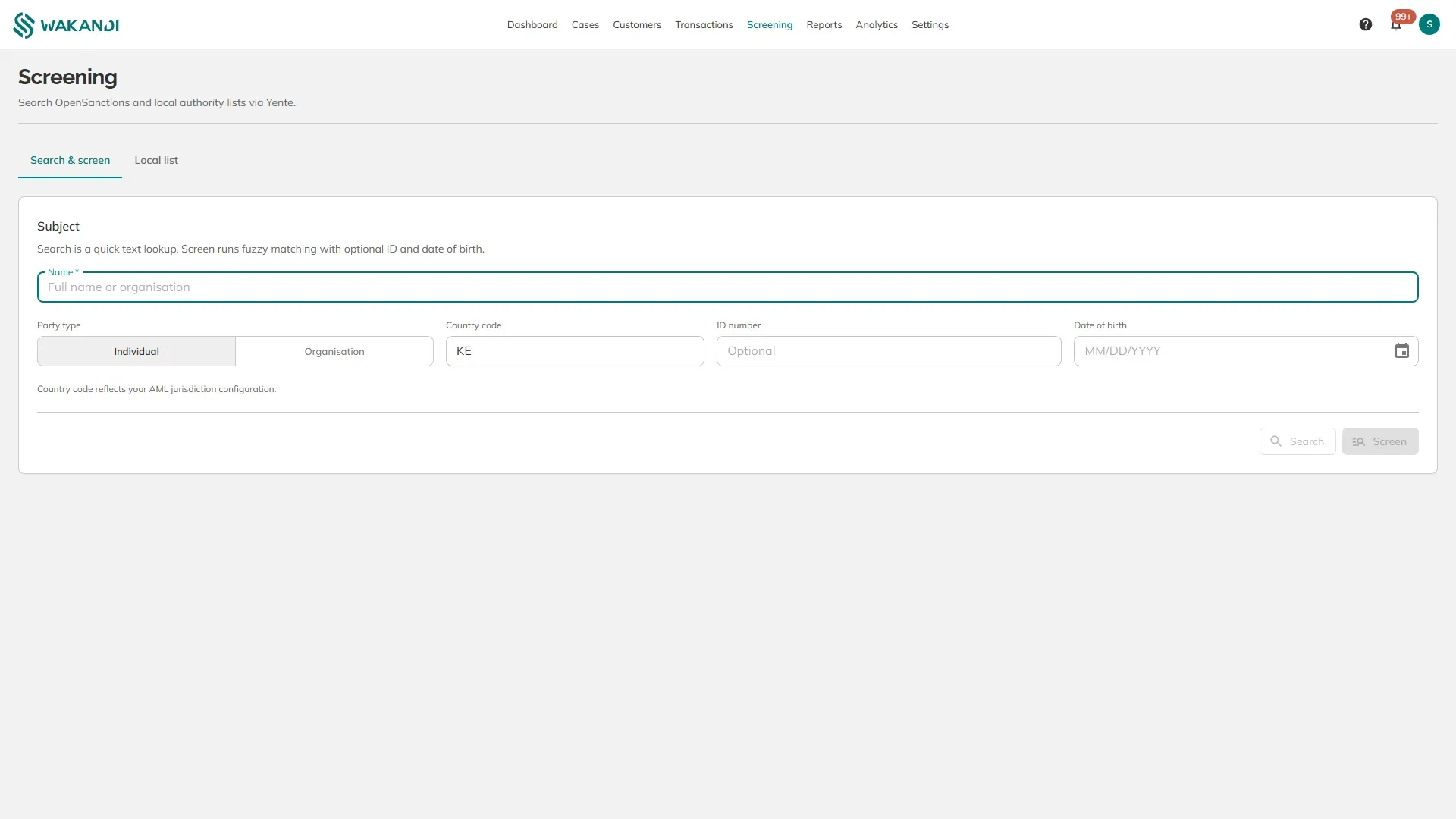
Figure 1: The Screening screen, where names are checked against sanctions and authority lists Treat a possible sanctions match as urgent: hold the transaction, tell your compliance officer and senior management the same day, and say nothing to the member. Expect screening to repeat — people become PEPs after joining, and lists change without notice.
Warning: Never tell a member they have been flagged or reported. Your duty to report covers tipping off.
Common pitfalls & FAQ
- "A PEP is a criminal, so we should refuse them." Most people in public office hold it honestly. The rule is extra care and senior sign-off, not rejection.
- "The system flagged the name, so the member is on a sanctions list." Not yet — the tool matched letters. Until the identifying details agree, it is an unconfirmed hit.
- "Ten hits means very high risk." A long list of hits usually means a common name. One hit that agrees on date of birth and identity number matters more than ten weak ones.
- "Screened at onboarding, so we are done." A member can be elected next year, and lists change without warning. Rescreening on your institution's schedule is part of the job.