Know Your Customer: getting a member identified properly
Summary
Identify a new member correctly at onboarding, so the record is complete, verified and usable when a question comes later.
About 4 minutes · 9 steps. Also called: KYC, customer identification, member due diligence.
Sign in with your email to read the rest of this article, track what you have finished, and earn your certificate.
Sign inPrerequisites
- Permission to create or edit a member record in CAMS.
- The member present, with original identity documents rather than photocopies alone. If a representative comes instead, identify both and check the representative's written authority to act.
- Your institution's list of accepted document types.
Step-by-step
Sign in to CAMS and open the member's record while the member is still with you — a new record or an update uses the same fields.
Copy the full legal name exactly as written on the identity document. No nicknames, no short forms.
Record the date of birth in full, and a physical address detailed enough to find the place. Add a landmark where street names are missing.
Record the identity document type and the document number in their own fields.
Take a phone number, and call or message it while the member is with you. A number that reaches nobody blocks every later question.
Verify the document rather than only filing it: check the expiry date and compare the number with what you typed.
Compare the photo with the person in front of you. If unsure, ask a colleague to look; if it still does not match, pause the record and hand it to your supervisor or compliance officer.
When a member cannot produce standard documents, follow your institution's exception process. Do not guess a number, and do not leave the field empty.
For a group, business or organisation, record the beneficial owner — the real person who owns or controls the money, not only the signatory.
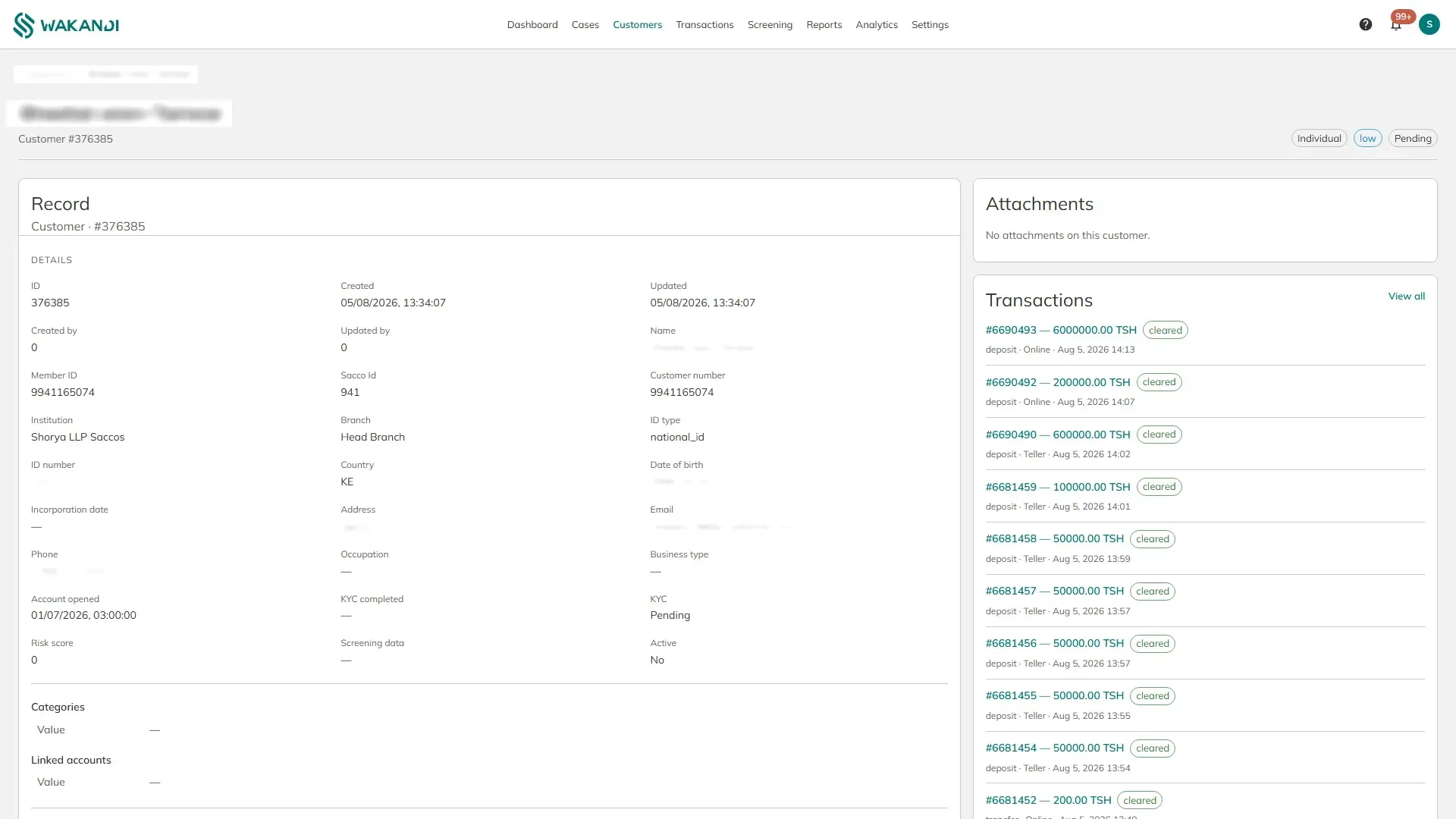
Figure 1: The member's AML profile, which is built from the identity details you record in CAMS
Note: CAMS holds these details and the member's AML profile reads them. A thin record gives you weak monitoring.
Common pitfalls & FAQ
- "I know this member, so I can complete the record later." Later rarely comes, and you cannot screen a name you do not hold.
- "A photocopy in the file proves identity." It proves a paper exists. Verification means you saw the document, checked it is current, and matched the photo to the person.
- "An agent came, so I identified the agent." Identify both, and keep proof that the agent may act.
- "A spelling difference is a small problem." A wrong spelling can hide a real match, or create a false one, when the name is screened. Fix it now, not after a case opens.