Appraising a loan: the 5 Cs

Appraising a loan means checking whether a member can really repay before you lend. The classic framework is the 5 Cs of credit, used by lenders everywhere to weigh risk in a balanced way.
Why it matters: most defaults trace back to weak appraisal, not bad luck. Lending against collateral alone, or trusting figures you never verified, is how good SACCOs lose members' savings.
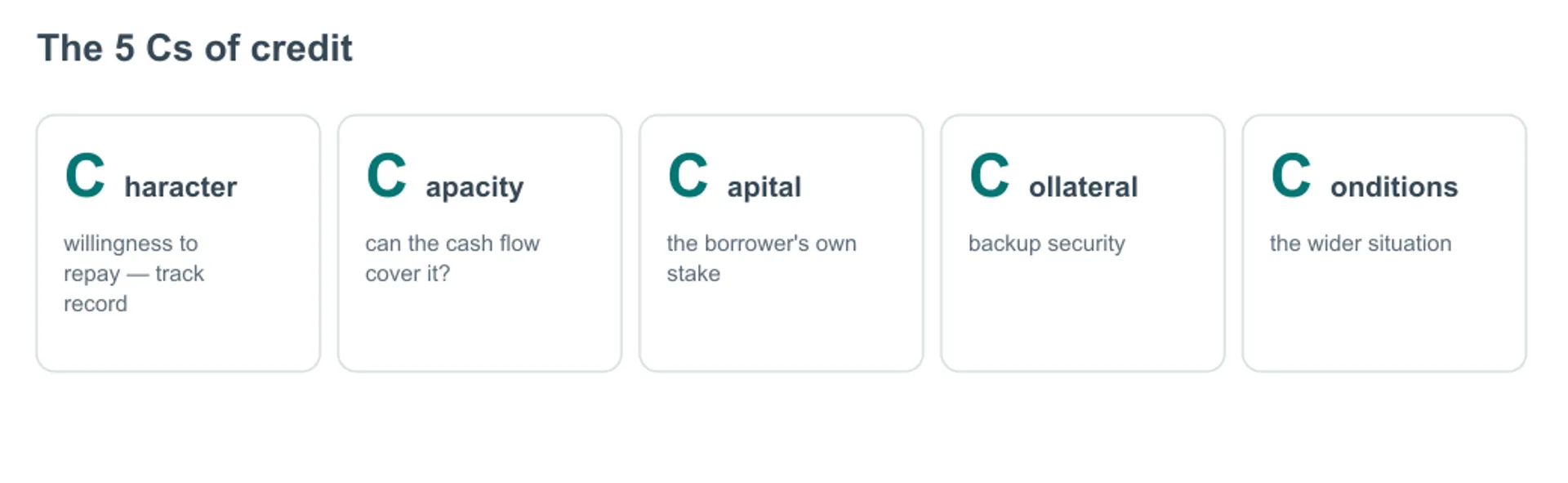
The 5 Cs
- Character: the member's repayment history and reputation. Have they repaid before? What do guarantors and records say?
- Capacity: the real ability to repay from cash flow. This is the most important C.
- Capital: what the member has invested themselves (savings, own funds in a business).
- Collateral: security you can fall back on, but it is a backstop, not the reason to lend.
- Conditions: the loan purpose plus outside factors like the season, prices, or the local economy.
Focus on cash flow, not just security
- Work out income minus living costs and existing debts to see what is left to repay.
- Make sure the new instalment fits comfortably within that surplus.
- Seizing collateral is slow, costly, and bad for member relationships, so avoid relying on it.
Verify before you approve
- Confirm income with payslips, bank or M-money records, or business books.
- Visit the business or farm where it matters.
- Check existing loans and guarantor commitments.
Common mistakes that cause defaults
- Approving on collateral value while ignoring cash flow.
- Taking stated income at face value without proof.
- Ignoring how much the member already owes elsewhere.
- Rushing approvals to hit lending targets.
In CAMS, appraisal notes and supporting documents attach to the loan application for review.
Quick checklist
- All 5 Cs assessed and written down.
- Repayment ability proven from cash flow.
- Income and documents independently verified.
- Existing debts and guarantor load checked.
- Loan purpose is clear and realistic.
- Decision recorded with reasons.