Red flags: what suspicious activity looks like in a SACCO
Summary
Recognise the everyday warning signs of laundering at a SACCO, and know what to do the moment you see one.
About 3 minutes · 5 steps. Also called: warning signs, suspicious indicators, unusual activity.
Sign in with your email to read the rest of this article, track what you have finished, and earn your certificate.
Sign inPrerequisites
- A feel for what normal activity looks like at your branch.
- The name of your compliance officer and your institution's internal reporting route.
Step-by-step
Learn what normal looks like — you build that sense from your first sign-in at the counter. A red flag is a break from the member's own pattern, not an amount on its own.
Treat a flag as a reason to look, never as proof. Most members have an innocent explanation, and the questions you ask everyone are part of the job.
Know the four families of flags:
- Cash. Several deposits sitting a little below the reporting limit; repeated round amounts that match no real trade; a sudden large sum from a member who never handled such.
- The counter. Answers that keep changing; unusual interest in which amount avoids a report; a member acting on someone's instructions who cannot say whose money it is.
- Account use. Money in and straight out again, a pipe rather than savings; a dormant account suddenly busy; many unrelated third parties paying in.
- Loans. A loan repaid in full, in cash, soon after it is taken; borrowing against savings whose origin the member cannot explain.
Weigh words against the account. Nerves alone tell you little, and a relative helping at the counter is normal, not a flag.
Write what you saw in plain factual words, with date and amount, and pass it to your compliance officer. The rules that watch for the same shapes automatically are covered in What CAMS monitors for money laundering.
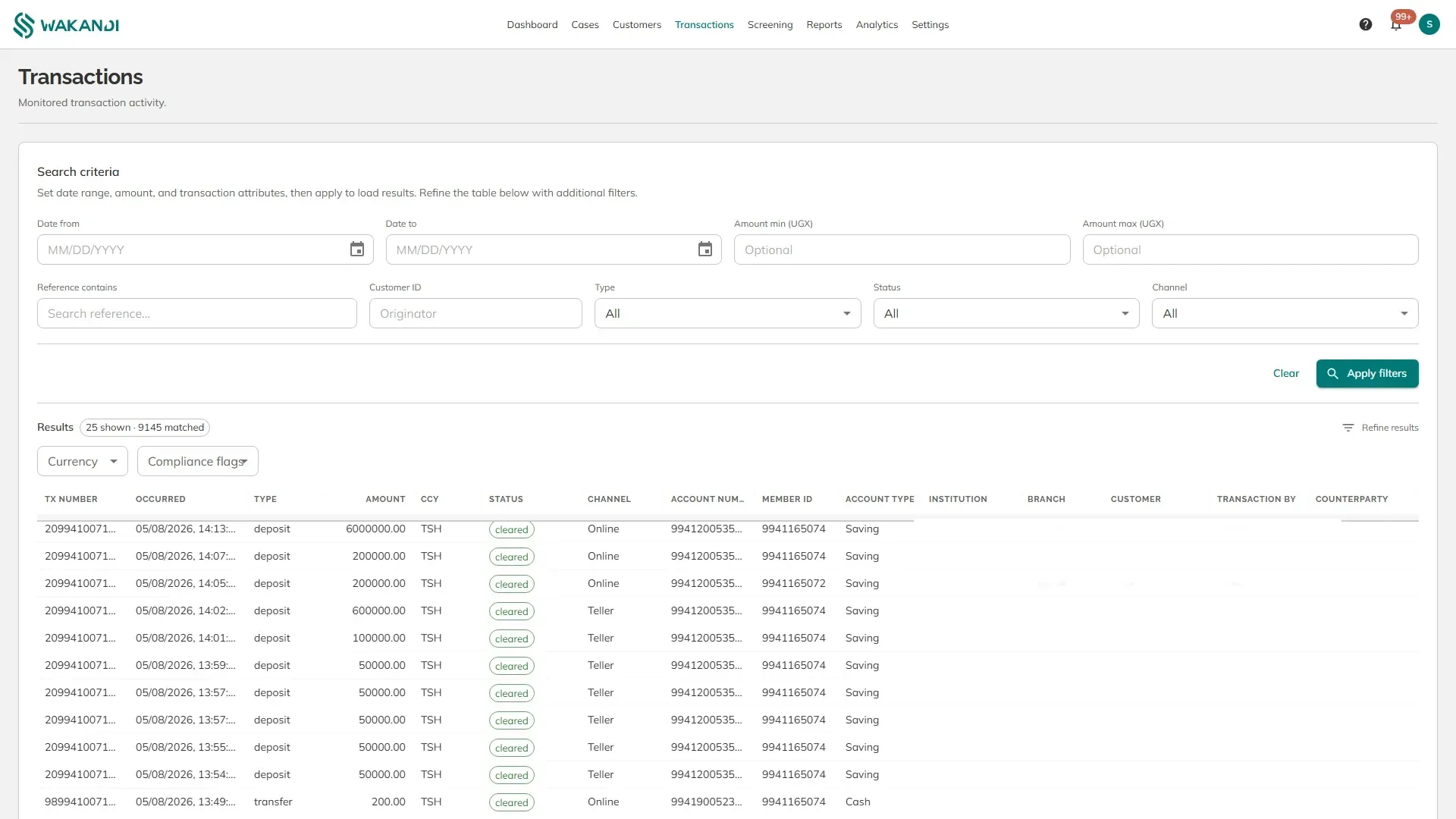
Figure 1: The Transactions view, where the shape of an account's flow is visible to your compliance team
Warning: Once you decide to report, stop questioning the member and do not tell them a concern was raised. Hand it to the compliance officer.
Common pitfalls & FAQ
- "A red flag means the member is a criminal." It means the activity does not fit. Traders, funerals and school fees all produce odd-looking weeks.
- "If I am not certain, it is safer to say nothing." Silence is the bigger risk. The compliance officer expects false alarms.
- "The system will catch it, so I do not need to." Rules read data. They cannot hear a question about limits at the counter. What you notice there is the part no system has.